Kiteba: A Futurist Blog and Resource

Strategic Foresight: Knowledge Ideas Technology Ecology Biology Architecture


Leave a comment

The Tantalus Paradox: A Possible Reason We Haven’t Met Aliens

My 13-year-old son and I recently went to the excellent 20th Annual Earth and Space Exploration Day at Arizona State University. Later, we were chatting over dinner, talking about space, and we kind of hit on an interesting possible explanation for why we very curious and industrious earthlings haven’t met any aliens yet. So let me develop our thinking here … we’re calling it the Tantalus Paradox.

First of all, it’s related to the Fermi Paradox. Originating with Enrico Fermi, the basic idea is that given the probabilities of life and technological development in the universe, it stands to reason that the universe should be teeming with civilizations. Yet, as Fermi is reputed to have quipped, “Where is everybody?”

Of course, we get answers like everything’s really far apart in the universe, life is pretty rare in the universe, and so on. Yet, we are finding new planets every day, new galaxies every day, and the odds are greater every day that there has to be intelligent life out there somewhere. And still where is everybody?

So my son and I came up with what we’re calling the Tantalus Paradox, after the character in Greek fable named Tantalus. Tantalus cooked and served one of his children and was sentenced by the gods to be trapped in water he couldn’t drink and with food dangling always just beyond his reach.

The Tantalus Paradox is intended to add a possible companion explanation for the Fermi Paradox and to stimulate thought. Here it is in rough argument form:

  1. The evolution of a technologically advanced civilization, no matter how alien or exotic, anywhere in the universe, requires at least two essential things: 1) the pressure of competition (first between species and later within the dominant species) which stimulates intelligence and problem-solving; and 2) abundant and available local resources (first on the home planet and later the home system, as a civilization evolves from Kardashev I to Kardashev II). The confluence of these two things is rare, but not impossible.
  2. The transition from a local system civilization to an interstellar civilization (Kardashev II to Kardashev III transition) requires a tremendous amount of within-species collaboration and lots and lots of available local resources.
  3. By the time any given civilization reaches the Kardashev II (K2 for short) stage, intense internal competition has become ingrained in the civilization, making large-scale collaboration difficult if not impossible, and local resources have been over-exploited. These two assets, competition and resources, are what got the civilization to this K2 point, but these things won’t get them to K3. We can call the transition from a Kardashev II civilization to a Kardashev III civilization the “K2-K3 chasm,” and it’s a huge leap that will be technically tough to cross anyway.
  4. Because evolution is what it is, any civilization anywhere in the universe, no matter how alien and exotic, will likely reach the K2-K3 chasm after having exhausted the means to cross it. Not only that, but destructive competition and resource exploitation will likely have brought about a crisis point that must be addressed—the survival of the species in question will require new approaches.
  5. Therefore, the vast majority if not all civilizations in the universe hit the K2-K3 chasm and either perish from resource over-exploitation or find some cooperative, resource-light way to persist, stuck in K2. Either way, interstellar travel, which may be possible in the abstract, is no longer possible in reality because the very evolutionary principles and availability of local resources that put it within a civilization’s grasp now prevent it from being attainable. Like Tantalus, civilizations are competitive, eat their futures, get stuck, and thus can’t reach the K3 bounty that would fuel further evolution and expansion.

So simply put, the paradox is that intense competition evolves intelligent civilizations but it also results in over-exploitation of resources, leaving civilizations stuck in their own systems, staring at the stars. That’s the idea in a nutshell. Not sure if it’s already out there. Of course, it assumes the non-existence of X-files–style conspiracies, secret space programs and other stuff like that. If we think about our own future, the cooperation and resource usage requirements kind of make sense, and a suggestion here is that solving for collaboration and smart resource usage may be essential, but they’re going to be tough challenges anywhere, not just here on Earth.

Anyway, I welcome any further thoughts on this Paradox.


Leave a comment

WFS AZ November 2016 Meeting: Dr. Tom Lombardo on Future Consciousness

Join the Arizona chapter of the World Future Society on Monday, November 15, from 6:30 to 8:30 pm at the Scottsdale Civic Center Library for an engaging presentation on Future Consciousness. Our own Tom Lombardo will be previewing his forthcoming book,Future Consciousness: The Path to Purposeful Evolution. RSVP here.

Topic: Future Consciousness: The Path to Purposeful Evolution

Presenter: Tom Lombardo

How does our unique human nature fit into the big scheme of things? How do our conscious minds reflect and amplify nature’s evolutionary process? Tom’s new book reveals how we can flourish in the flow of evolution and create a good future for ourselves, human society, and the planet.

The key is future consciousness. Future consciousness involves the normal human abilities to feel and desire, learn and anticipate, imagine, think, and plan, and purposefully act toward the creation of the future. Our most distinctive and empowering human capacity, in fact, is to facilitate purposeful evolution through future consciousness. Through future consciousness we have realized an “evolution in evolution,” bringing evolution under informed, thoughtful, and purposeful control. We are self-evolutionary beings with an “eye on the future.” Human civilization, as well as our personal conscious selves, are creations of future consciousness. But we can all greatly enhance our capacity for purposeful evolution through the further development of our future consciousness. Within his new book Tom explains how to heighten and strengthen our future consciousness along all the dimensions of human psychology, including self-control, emotion, motivation, action, learning and memory, thinking and imagination, creativity, and personal identity. Through the heightening of future consciousness we are able to best answer and address the central question of human life: What is the good future and how do we create it?

In a time rampant with relativism and egocentricity; nihilism and pessimism; materialism and consumerism; polarization and tribalism; irresponsibility and victimization; superficiality and bread and circuses; and presentism and a hostile fear of change, Future Consciousness: The Path to Purposeful Evolution envisions a progressive future, based on a scientifically grounded philosophy of self-empowerment, psychological growth, and ongoing human evolution within an evolutionary cosmos.

Advance praise for Future Consciousness: The Path to Purposeful Evolution:

“Lombardo has written a masterpiece, a must-read book…for futurists, psychologists, social scientists, scholars, and academics of every type… one of the most creative I have read.”  Wendell Bell, Emeritus Professor Yale University 

“Tom Lombardo’s worldview is like a multiverse: vast, in depth, multidimensional. Each new book from this world renowned futurist is a new stellar light enlightening the understanding of what it means to be human…” — Fabienne Goux-Baudiment, Former President of the World Futures Studies Federation 

“It would be hard to imagine a book that covers such a vast landscape with the clarity and coherence found in [this book]… [containing] a philosophy of reality and of life that is truly breathtaking.”  Dr. Peter Bishop, Retired Professor, Studies of the Future, Univ. Houston

“…an extraordinary accomplishment and deserves the laurels that it will undoubtedly receive.” — Tim Mack | Former President of the World Future Society

“A passionate and important book that challenges you to take your everyday thinking and zoom way out… on a whole new epic scale…a deeply wise book for a wise future.”  Charles Cassidy, Director, Evidence-Based Wisdom

About Tom Lombardo:

Tom Lombardo, Ph.D. is the Director of the Center for Future Consciousness and The Wisdom Page, the Managing Editor of the online journal Wisdom and the Future, and Professor Emeritus and retired Faculty Chair of Psychology, Philosophy, and the Future at Rio Salado College. 

He has published seven books and over fifty articles, and given numerous national and international presentations, on various futurist, psychological, educational, and philosophical topics. His book Contemporary Futurist Thought has been described as a “masterpiece;” his The Evolution of Future Consciousness a “heroic synthesis;” and Mind Flight “a truly remarkable book.” 

He has been a professional member of the World Future Society, the World Futures Studies Federation, and the Association of Professional Futurists and an editorial board member of the Journal of Futures Studies and the World Future Review. Aside from his soon to be published Future Consciousness: The Path to Purposeful Evolution, he is also completing the first volume of a trilogy Science Fiction: The Evolutionary Mythology of the Future.

Please save the date!


Leave a comment

Everything Change: An Anthology of Climate Fiction

Everything Change: An Anthology of Climate Fiction is a newly released digital book of speculative fiction that, as the title suggests, explores some of the near-future impacts of climate change. To quote the Foreward by Kim Stanley Robinson, “This book collects a number of new and exciting stories about things that will be happening soon, as people try to adapt to a changing climate and its impacts on our biosphere.”

The title Everything Change is drawn from a quote by Margaret Atwood.

Here is the Table of Contents of the collection:

  • Kim Stanley Robinson, Foreword
  • Manjana Milkoreit, Meredith Martinez, and Joey Eschrich, Editors’ Introduction
  • Adam Flynn and Andrew Dana Hudson, “Sunshine State”
  • Kelly Cowley, “Shrinking Sinking Land”
  • Matthew S. Henry, “Victor and the Fish”
  • Ashley Bevilacqua Anglin, “Acqua Alta”
  • Daniel Thron, “The Grandchild Paradox”
  • Kathryn Blume, “Wonder of the World”
  • Stirling Davenport, “Masks”
  • Diana Rose Harper, “Thirteenth Year”
  • Henrietta Hartl, “LOSD and Fount”
  • Shauna O’Meara, “On Darwin Tides”
  • Lindsay Redifer, “Standing Still”
  • Yakos Spiliotopoulos, “Into the Storm”
  • Ed Finn, “Praying for Rain: An Interview with Paolo Bacigalupi”

This fabulous collection of work is a product of the Imagination and Climate Futures Initiative at Arizona State University and is available as a free download in multiple formats here.

More great futures work from ASU!


Leave a comment

WFS AZ September 2016 Meeting: Dr. Michael Burnam-Fink on Human Enhancement

Join the Arizona chapter of the World Future Society next week, Monday, September 26, from 6:30 to 8:30 pm at the Scottsdale Civic Center Library Gallery Meeting Room for an engaging presentation on Human Enhancement. RSVP here.

Topic: Is Human Enhancement for Real?

Speaker: Dr. Michael Burnam-Fink

Based on his recent PhD dissertation Making Better Students: ADHD and the Biopolitics of Stimulant MedicationMichael Burnam-Fink will talk the current and near future status of human enhancement, using the case study of stimulant medication by college students as way to probe the ethics and practicality of human enhancement.

ABSTRACT FROM MICHAEL BURNAM-FINK:

“According to my 2016 survey of ASU undergraduate students, 33% have used stimulant medications (e.g. Adderall or Ritalin) without a prescription to study. I view this practice as a step towards cognitive enhancement, which is the deliberate application of biotechnology to radically alter the human condition. From a foresight perspective, the ability to actively improve human beings, to take our evolutionary destiny into our own hands, may be a turning point on par with agriculture or the use of fossil fuels. The existential risks, however, may be greater than the benefits—and many of the most radical technologies have made little documented progress.

“I turn to an actual example where people are trying to make themselves marginally better at academic tasks, as a guide to how future transformative development in human enhancement may be incorporated into everyday practice. This project examines the history and context that led to the widespread use of stimulant medication on college campuses. I describe how Attention Deficit Hyperactivity Disorder (ADHD), for which stimulant medication is prescribed and diverted, governs students, negotiates relationships between parents and school authorities, and manages anxieties resulting from a competitive neoliberal educational system.  I extend this archaeology of ADHD through the actions and ethical beliefs of college students, and the bioethical arguments for and against human enhancement. Through this work, I open a new space for an expanded role for universities as institutions capable of creating experimental communities supporting ethical cognitive enhancement.”

A lively discussion on Human Enhancement will follow, so bring your questions and ideas.


Leave a comment

World Future Society AZ August 2016 Meeting: Dr. Ted Pavlic on Biomimicry

Join the Arizona chapter of the World Future Society next week, Tuesday, August 23, from 6:30 to 8:30 pm at the Scottsdale Civic Center Library Gold Room for an exciting presentation on the emerging discipline of Biomimicry. RSVP here.

Topic: Biomicry

Presenter: Dr. Theodore (Ted) P. Pavlic, Associate Director of Research, Arizona State University Biomimicry Center  

Join us as Dr. Ted Pavlic speaks about Biomimicry, the ASU Biomimicry Center and his own research.

About Biomimicry

According to the ASU Biomimicry Center website:

Biomimicry is an emerging discipline that seeks to emulate nature’s strategies and principles to create sustainable solutions to human challenges.

By asking the question: “How would nature do this?”, biomimics around the world are creating products, processes, companies and policies that are well adapted to life on earth over the long haul. Examples include turbine blades designed like whale fins to reduce drag and stronger fiber optics produced like sea sponges. (See seven more examples explained on Mother Nature Network.)

Humans have turned to nature for inspiration and solutions for a long time. But a formal methodology—drawing on peer-reviewed biological research–has only evolved over the last several decades.

Following the publication of her seminal 1997 book Biomimicry: Innovation Inspired by Nature, Janine Benyus and Dr. Dayna Baumeister created the Biomimicry Guild, which formalized the practice of biomimicry as a methodical tool for innovating sustainability solutions.

As demand grew for biomimicry education and consulting, Benyus and Baumeister founded the non-profit Biomimicry Institute and the innovation firm Biomimicry 3.8, which has worked with notable clients like Interface, HOK, Nike and Coca-Cola.

As futurists, it’s interesting to reflect how such a sustainable approach to solutions might impact thinking and shaping future innovations and outcomes.

About Dr. Pavlic’s Research

Dr. Pavlic’s research focuses on understanding adaptive decision-making strategies in autonomous systems. To this end, his laboratory does empirical work with natural systems, such as social-insect colonies, and does engineering work building decision-making algorithms for artificial systems, such as decentralized energy management systems for the built environment. Just as the biological models provide inspiration for novel engineering solutions, the engineering problems inspire new lines of scientific inquiry about those biological systems. This bidirectional flow is facilitated by solid mathematical models of fundamental decision-making processes in common with both the natural and engineered systems.

About Dr. Pavlic

Dr. Pavlic has an interdisciplinary background, starting with a PhD in electrical and computer engineering, progressing through research appointments in computer science and life sciences, leading to his current joint appointment as an Assistant Professor in the School of Sustainability and the School of Computing, Informatics, and Decision Systems Engineering and an Adjunct Appointment in the School of Life Sciences.  Dr. Pavlic is the Associate Director of Research for The Biomimicry Center at Arizona State University. He is also active in several professional organizations and publication venues across engineering and life sciences. Dr. Pavlic is faculty in Sustainability, Industrial/Mechanical/Aerospace/Electrical/Computer Engineering, Applied Math in the Life and Social Sciences, Biology, and Animal Behavior, and he is active in several of the complexity-related groups across ASU’s campus.
Join us for this fascinating discussion.


Leave a comment

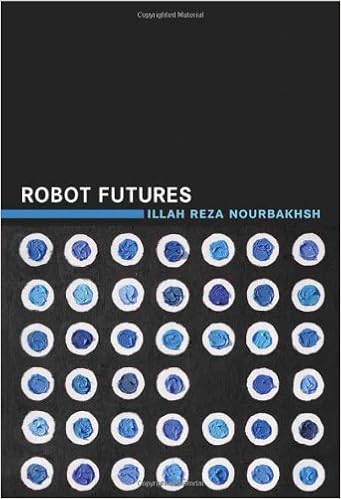
Futurist Book Review: Robot Futures by Illah Reza Nourbakhsh

It’s a fundamental tenet of strategic foresight, or futures/futurism, to avoid making singular predictions. Instead, we recognize the multitude of possibilities and attempt to consider multiple alternative futures for any given facet of our lives, including specific technologies. But not everyone who thinks about the future adheres to this tenet, and it’s not uncommon to find very intelligent people with technical expertise making predictions. So it’s refreshing to find a book by a technical expert that doesn’t predict, but instead explores alternative futures.

One such book is Robot Futures by Illah Reza Nourbakhsh. Nourbakhsh teaches Robotics at Carnegie Mellon University. He also directs the Community Robotics, Education, and Technology (CREATE) Lab at Carnegie Mellon. He has taught and written on Robotics for many years and is the coauthor of Introduction to Autonomous Mobile Robots.

As one would imagine, Robot Futures is an accessible work by an academic whose mission is to interface with communities on what robots should or could be. From a foresight methods perspective, there is no formal approach behind Robot Futures. That is to say, no specific research is indicated. However, Nourbakhsh brings a uniquely informed perspective and credits many colleagues for feedback on his ideas. The real substance of the book lies in his outline of the major trends and key issues (especially technical issues) related to robot development, as well as five engaging, fully fleshed out scenarios for robots in the future. For each scenario, he presents a vivid science fiction-style narrative description, all of which are well done and effectively depict the scenario.

Looking into the future, then, Nourbakhsh is focused on robot futures in the year 2030, and his scenarios are targeted to that year, with the exception of one that is a kind of wildcard that he recognizes is mostly likely beyond 2030.

The five scenarios are:

  1. New Mediocracy — A robotic future in which offline space is automated and tracked in the same way online space is now (emphasis on targeted advertising).
  2. Robot Smog — A future in which toy, DIY, and kit robotics are everywhere, out of control, junking up the world.
  3. Dehumanizing Robots — A future in which automated bots are ubiquitous and regularly abused or tormented by humans.
  4. Attention Dilution Disorder — A future in which telepresence bots allow us to be in many places at once and nowhere at all.
  5. Brainspotting — A further-out wildcard future in which sophisticated nanobot control systems can reanimate biological material so that you can run another human (corpse) or an animal such as a dog.

In these scenarios, Nourbakhsh assumes that robotic development will continue, and each of his scenarios “imagines an ever-further robot future in which underlying robot technologies have advanced.” His assumptions are certainly those of the technician, but his engagement with communities helps him see the human context. Imagining robots here, the focus centers on three dimensions: 1) perception capabilities; 2) capacity for actions; and 3) cognitive capabilities. These are all technical frames that help drive the scenarios, and Nourbakhsh assumes slow advancement in all areas. Beyond the technical, he is somewhat optimistic about the ability of government and communities to manage technology.

One of the most valuable sections of the book may be the technical discussion of robotics capabilities and technical drivers. Specifically, key capabilities/drivers outlined are the following: 1) Structure; 2) Hardware; 3) Electronics; 4) Software; 5) Connectivity; and 6) Control. All of the scenarios outlined in the book have some combination of the above robotic capabilities, solved and deployed differently. Some of the new capabilities include controlling other living beings with nanobots; managing multiple telepresence instances of oneself; and extreme tracking of individuals in the offline world.

In the end, the scenarios laid out by Nourbakhsh are creative and compelling. The sci-fi vignettes are extremely effective in communicating the scenarios as well. I see each scenario as valid in terms of depicting fragments of possible robot futures. Some are rather counter-intuitive or unexpected, such as Brainspotting, and generally those scenarios are the more interesting. However, I think Nourbakhsh could have pushed them further, even in the 2030 timeframe, and I find the bias here very human-centric. That is, the Robot Futures scenarios are mostly ones in which robotics are more or less directly under human control, or else the robots are playing out some basic programming. The idea that robots may become their own entities, powered by AI perhaps, that they might move away from human control or contexts, and become something else, even in some limited sense, is not explored.

Additionally, one might argue that Nourbakhsh’s scenarios focus too much on negative attributes of present-day humans: we’re sloppy, abusive, unfocused, etc. Humans may develop too, I would counter, but one has to admit human foibles are certainly either possible drivers or outcomes of the way a technology like robotics may develop in the future.

All in all, the book presents an informed perspective and will reward the effort of reading it.


Leave a comment

Hack 2050: A Science Fiction Future Series in Development

Hack-2050-First-Header-Divi

Here’s a great futurist project in development: Hack 2050.

To quote the site:

Hack 2050 is a new “Mixed-Reality” YouTube web series that combines a science fiction backstory about Seti Speaks, a time traveling AI augmented transhuman Anthrovideologist, with a documentary style news show about the thought leaders, ideas, and issues behind the innovations and science that are leading humanity towards a technological singularity.

Episode topics will include AI, Quantum Computing, Genetics/Genomics, Machine Learning, Time Travel, Robotics, Transhumansim, Posthumanism, Brain Interfaces, Synthetic Biology, Universal Basic Income, Biohacking, Mind Uploading, Human Consciousness, Immortality, Super Intelligence, Crypto Currency and Blockchain, Swarm Intelligence, Government, Economics, Religion and ethics.

The project is led by a great team of writers, and I will be helping out with some futures/foresight input. A side part of the project is that we will be conducting, in conjunction with the Arizona chapter of the World Future Society, a series of foresight workshops to map out possible futures associated with the key technologies and issues features in the Hack 2050 narrative. If you’re interested in participating in the Hack 2050 Workshops, look for notifications on the WFS AZ meetup page. Our first workshop will take place in September and cover transhumanism.

Hack 2050 is an exciting fusion of sci-fi and foresight. I will provide further updates here as the project develops. If you’re interested in contributing in any way to the project, contact the team here.


Leave a comment

Social Robotics: Four Scenarios

This past weekend, Houston Foresight colleague Ciara O’Connell and I presented Social Robotics: Four Scenarios at the World Future Society‘s annual Conference, World Future 2016. Our presentation was part of the University of Houston’s Next Gen Foresight Grads session on Saturday, July 23, 2016.

Social Robotics: Four Scenarios looks at the field of social robotics, which involves robots with social and emotional capabilities. The presentation is a distillation of research Ciara and I conducted with Karen Jacobs, another student in the Houston program. In our work, we applied Houston’s framework foresight scanning and trending methods, and then developed four future scenarios using an application of the Global Business Network’s 2×2 matrix.

My personal interest in the social robotics space came out of my research in artificial intelligence and the suggestion made by some theorists that true intelligence or self consciousness could only arise if an intelligence were embodied, which of course led to robots, and then to the emerging new field of social robotics. It occurred to me that social robotics may in fact be the killer app for AI. Taking this initial interest, our team uncovered additional insights and synthesized our research into four compelling scenarios.

Here is our presentation:

These four scenarios are possible futures that depend on investment and development variables in the space, as well as market factors. Social robotics is likely to remain an exciting field for some time, and we’re pulling for the more democratic Ro-Buddies scenario in which everyone has their own personal robotic pal.

Thanks to Ciara and Karen for bringing so much insight and hard work to this research. Thanks also to Andy Hines of Houston Foresight, our professor and champion, as well as to the WFS for a nice conference.


Leave a comment

World Future Society AZ July 2016 Meeting: Dr. Jekan Thanga on Future Trends in Space Exploration

Join the Arizona chapter of the World Future Society next week, Tuesday, July 19, from 6:30 to 8:30 pm at the Scottsdale Civic Center Library Gold Room for an exciting presentation on the future of space. RSVP here.

Topic: Future Trends in Space Exploration

Speaker: Dr. Jekan Thanga, head of the Space and Terrestrial Robotic Exploration (SpaceTREx) lab at ASU.

Exploration of space can answer fundamental questions of our origins, our existence and our future. Through space exploration, we have become better aware of the threats facing our planet and potential future opportunities to explore and migrate off Earth. However, exploration of space remains an expensive endeavor that often only a select few nations can undertake due to the high cost, requirement for specialized equipment and personnel. Some of the most exciting locations in the solar system are not yet accessible due to limits in current technology and current risk postures. We are living in exciting times when this is about to change. Thanks to miniaturization of electronics, availability of long-range communication systems, availability of private launch opportunities and services in space, the stage is getting set for a new space economy.

On this new stage, are new actors, including universities, non-profit foundations, private companies, startups and individuals/hobbyists. Thanks to all these factors, we see a future where travel to low-earth orbit becomes routine, we see the foundation for extraction of resource in space, made in space products and services. Humans will routinely go into low-earth orbit for tourism, science/engineering and commerce. Instead of sending one large spacecraft or rover to a planetary surface, missions will be sending swarms of small spacecraft and robotic devices that can observe many places at once, travel harsh inhospitable environments where even if a few are damaged the mission continues.

In addition these systems will have the ability to roll, dig underground, hop and fly. Such capabilities will enable us to obtain in-situ pictures and science data, perform resource prospecting and help to uncover some tantalizing mysteries, while providing us “Google Street View” level of detail of large areas of the Moon, Mars and beyond.

About Dr. Thanga:

Assistant Professor Jekan Thanga heads the Space and Terrestrial Robotic Exploration (SpaceTREx) Laboratory at Arizona State University. He has a background in aerospace engineering from the University of Toronto. He worked on Canadarm, Canadarm 2 and the DARPA Orbital Express missions at MDA Space Missions. Jekan obtained his Ph.D. in space robotics at the University of Toronto Institute for Aerospace Studies (UTIAS) and did a postdoc at MIT’s Field and Space Robotics Laboratory (FSRL). Jekan is broadly interested in the exploration of space and extreme environments, using networks of robots, interplanetary CubeSats and smart sensors. He is the PI or Co-PI for several space missions and concepts, including the AOSAT 1 CubeSat Centrifuge to be launched in 2017, mission concept to explore Europa’s surface using a CubeSat and SWIMSat, a satellite to look for space threats.

Space and Terrestrial Robotic Exploration (SpaceTREx) Laboratory site.


Leave a comment

WFS AZ Scenarios on the Future of American Politics

As some of my readers know, I organize the Arizona chapter of the World Future Society. To quote the web site, “the World Future Society is the world’s premier community of future-minded citizens. Our mission is to harness the spirit of discovery, the power of imagination, and the energy of collective action to create a brighter future.”

Our local group in Phoenix has been meeting since 2014, and I think we really embody the spirit of the organization. We’re a diverse group and have a lot of fun in more formal monthly meetings with speakers and also in monthly social gatherings where we just eat, drink and chat.

If you’re in the Phoenix area, or anywhere in Arizona, you should join us, even if you’re not currently an official WFS member. All you have to do is have an interest in the future. Join our meetup group here.

Anyway, we usually have speakers every month, but for our March 2016 general meeting, we did a quick and dirty Global Business Network (GBN) 2X2 scenario planning exercise. Our WFS group wanted to explore the future of American politics, so we did that. Even with the pre-work reading many of us did, it would always be tough to do anything deep in 2 hours, but it was amazing how insightful the process and the outcome turned out to be.

Here’s the outcome of the exercise:


Very good work, again, though our group will be the first to admit that nothing here is definitive or authoritative. And we would all agree that, with what many consider a very pivotal, potentially game-changing presidential election just months away, there’s no better time to really stop and think about the longer-term future of American politics.

Design a site like this with WordPress.com
Get started